




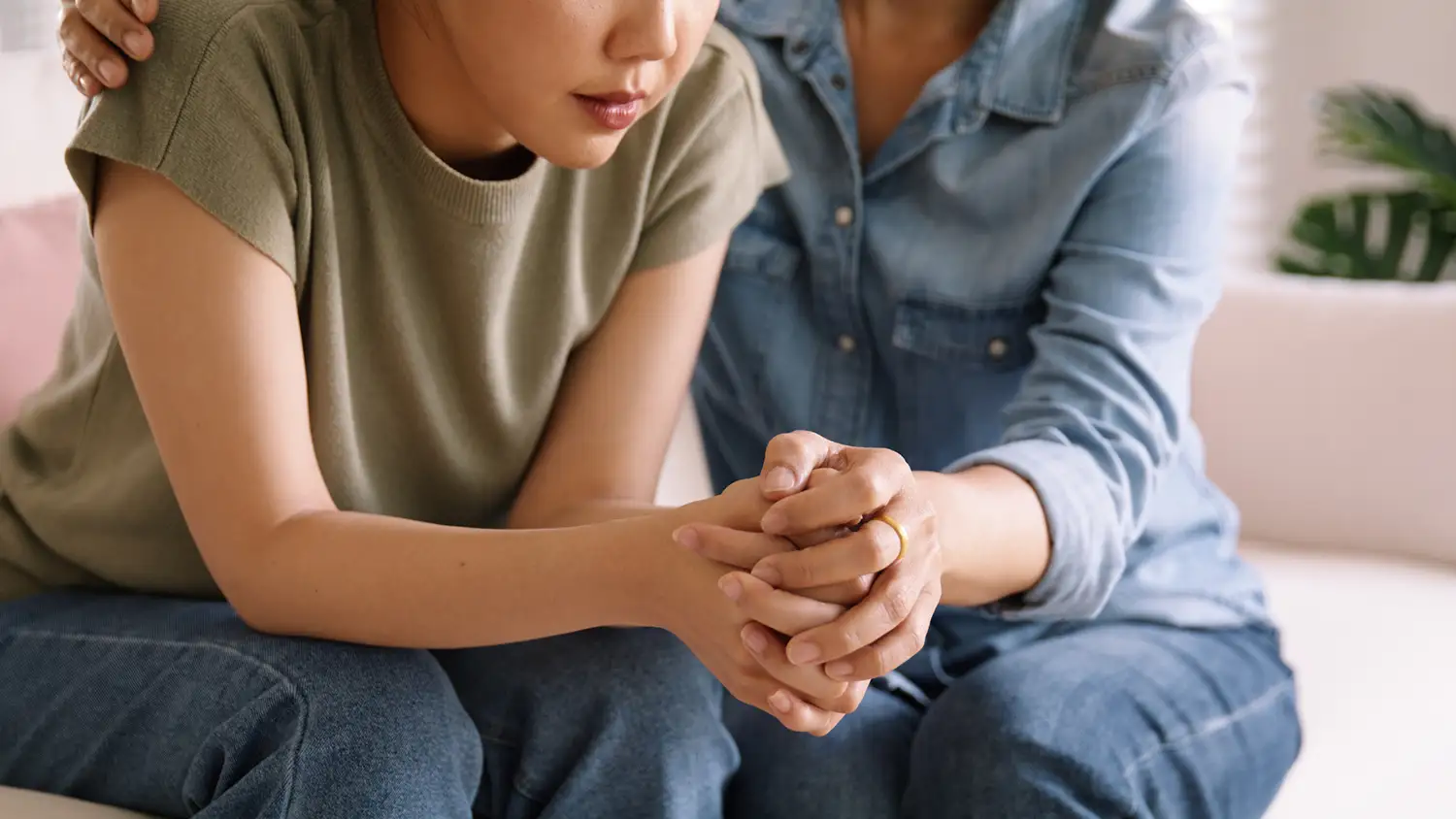
“Now, I want to use my experience to encourage everyone still struggling in the darkness: You are not alone—absolutely not.”
By Kairong
Once, I had a husband who loved me deeply and two young children. After moving from China to Singapore, a foreign land—our family remained happy, complete, and everything felt steady, safe, and whole. He loved me and the children so much that I felt my life was utterly perfect.
However, all of that was shattered when my husband fell ill. After going through surgery after surgery and endless rounds of treatment, the man I loved most left us forever two years ago. When he held my hand and took his final breath, my whole world collapsed. I was consumed by grief and terror. For a long time after, I couldn’t stop seeing the image of him in those final moments. I kept asking myself over and over: “What should I do? How do I keep living?”
At his final farewell, I fought desperately to stop them from closing the coffin. At that moment, I wanted nothing more than to climb in and go with him. I watched helplessly as the white coffin slid along the track into the cremation chamber. My dearest love turned into a wisp of smoke, and I could only squat in the viewing room upstairs, crying and screaming in despair.
After that, I cried every day. “Living is harder than dying”—that was the only way I could describe it. I went to see a psychologist, took sleeping pills, but the pain inside me never went away. In this country, my husband had been my only family, my only support. Now that he was gone, I had no one to rely on, yet I still had to drag my broken body around to care for two small children.
To save money, I moved in with my mother-in-law. But living under someone else’s roof was excruciating. Every night, after the children fell asleep, all I could do was cry again and again. I told myself sometimes: “I can’t die; I have to live for the children.” Other times, I wanted to end it all immediately, unable to bear another second of this world. I even thought about taking my children with me to join their father. And so, in that endless torment and contradiction, I lived each day half-dead, just enduring.
In the end, she made an appointment for me and went with me. To my surprise, that visit became the beginning of a gradual change in my life.
One day, a woman named Melody sent me a message. She told me she had gone through a similar experience and lived nearby. She wanted to meet up and talk. I hesitated for a long time, unsure whether I should contact her—let alone meet in person. I imagined it would just be two widows talking about their sorrows, crying together, comforting each other a little, and then going back to our painful lives. While that was not what I wanted, I forced myself to go out of politeness.
Of course, there were tears and sadness in our conversation, but that was only part of it. We also naturally began to talk about “the future” and “hope.” Suddenly, I realised how long it had been since those two simple words had even existed in my mind. During all those dark days, those topics had been completely blank for me. That day, we talked about so much.
Afterward, Melody often reached out to me, inviting me and the kids to gatherings. From then on, I gradually got to know other women who had gone through similar losses. We were of similar age, and our children were about the same age too. Under Melody’s organisation, we started having small regular get-togethers. Each time we met, there was always so much to talk about. In those moments, I felt warmth and understanding—feelings I hadn’t had for a long time.
Before this, I had avoided socialising entirely. I didn’t want to see anyone. I was afraid people would ask, “Where’s your husband?” and I couldn’t bear to see other families together, happy and whole.
But through these moments of companionship, my heart slowly softened. Through Melody, I also met brothers and sisters from the church who showed me genuine care and love. Gradually, the gears of my life began to turn forward again.
I noticed that the children quickly made friends and played joyfully together. They laughed, chased each other around, and little by little, they came back to life. No longer were they walking on eggshells around me, whispering so as not to disturb my grief. They began to smile freely again.
If you are in pain right now, you might not be able to feel what I’m describing. I understand, because I have walked that same dark path. I’ve heard all those “useless” words of comfort, and I’ve had all those strange thoughts you’re having. We are the same—you and I. But I want to tell you, friend, it is possible to start again, little by little. You don’t need to force yourself. Don’t suppress your feelings. Allow yourself to grieve, to cry, even to scream, but please—slowly try to accept, to step outside, to live again. You’ll find that even in this cruel world, there is still light.
I want to thank Melody, and I deeply cherish the friendship we now share. And I also want to thank the version of myself who chose to keep living. Life gave me unbearable sorrow, but it also gave me the courage to rise again.
Now, I want to use my experience to encourage everyone still struggling in the darkness: You are not alone—absolutely not.


